
Welcome to the Moon!
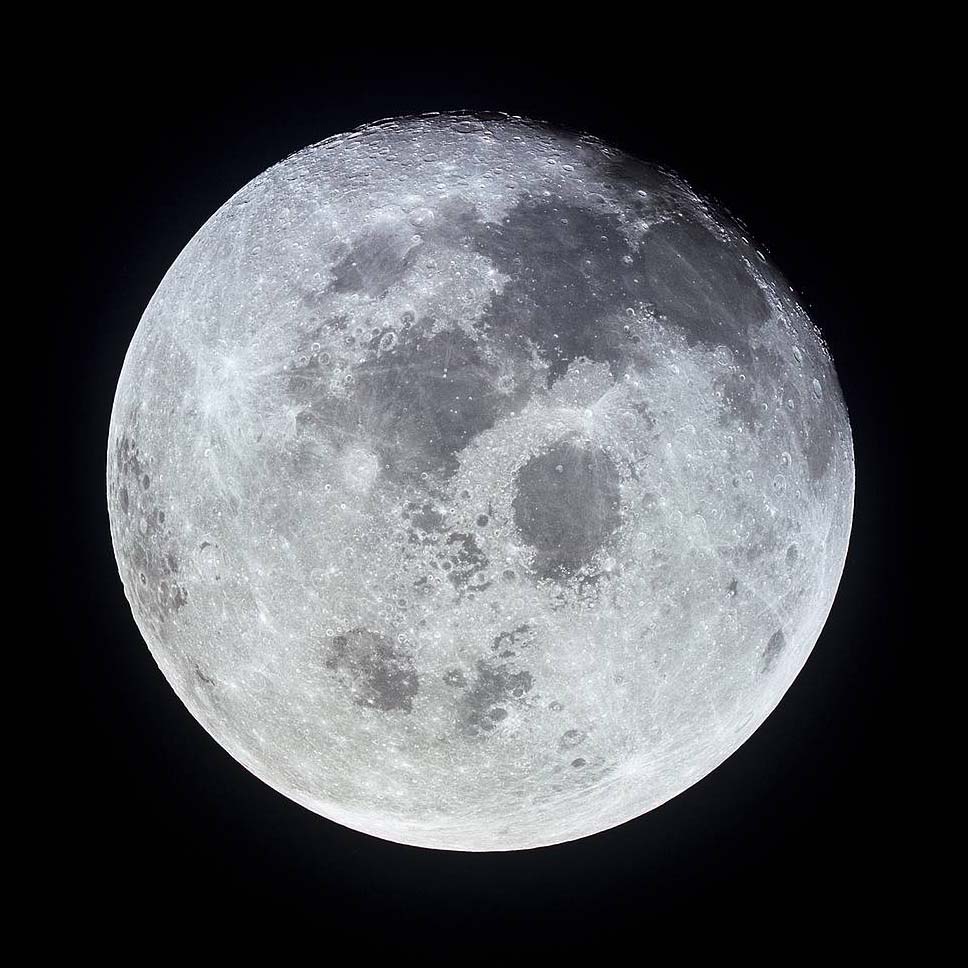
Earth's neighbour in space
The Moon is Earth’s only natural satellite and the nearest major world to Earth in space. It is the second brightest object in Earth’s sky after the Sun, and the only place beyond Earth where human beings have walked.
The Moon does not make its own light. It shines by reflecting sunlight as it travels around Earth, creating the changing phases that can be seen from the ground.
The Moon quick facts
Classification
Natural satellite
Orbits
Earth
Average distance
384,400 km
238,855 miles from EarthDiameter
3,476 km
2,160 milesDay length
27 days, 7 hours, 43 mins
Orbit length
27 days, 7 hours, 43 mins
Temperature
Min: -173 °C / -280 °F>
Max: 127 °C / 260 °F
Visited by humans?
Yes
The only world beyond Earth where humans have walkedThe Moon in context
How far away is the Moon?
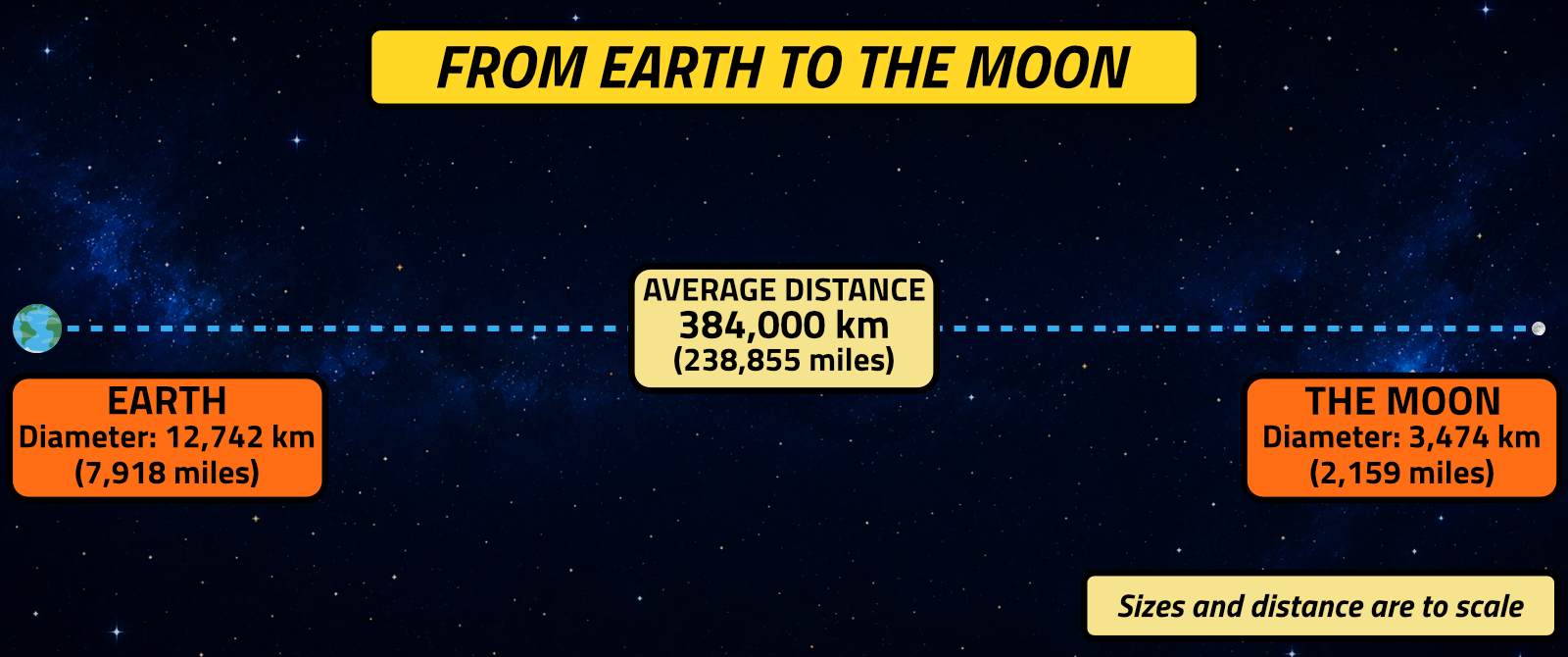
The Moon is much smaller than Earth, but it is also much farther away than it may appear in most pictures. On average, the Moon orbits Earth at a distance of about 384,400 kilometres.
Explore the Moon
Find out more about the Moon by exploring its phases, tides, full moons, Apollo missions and fascinating facts.
The Moon's Phases
Discover why the Moon appears to change shape as it travels around Earth.
Explore the Moon's phases →The Moon and Tides
Find out how the Moon’s gravity helps create the rise and fall of Earth’s oceans.
Explore tides →The Apollo Missions
Learn about the missions that took human beings to the Moon for the first time.
Explore Apollo →The Full Moon
Find out what a full Moon is and why it has inspired stories, calendars and traditions on Earth.
Explore the full Moon →Photos from the Moon
View images from the Moon, including photographs taken during lunar exploration.
View Moon photos →Ten Facts about the Moon
A quick collection of fascinating facts about Earth’s companion in space.
Read Moon facts →